League Table Positions and Shifts in Online Soccer Betting Activity
Kai Lehmann · Oct 22, 2026
League Table Positions and Shifts in Online Soccer Betting Activity
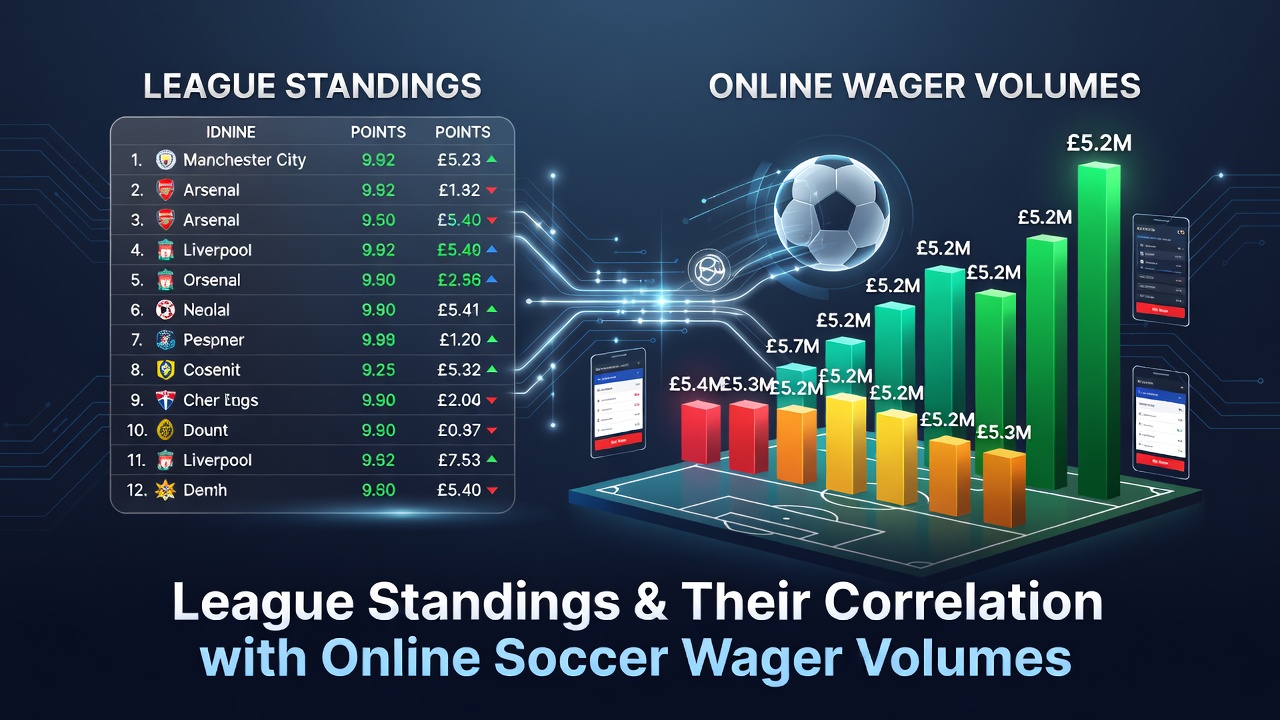
League standings serve as a central reference point for many participants in online soccer wagering markets, and data from multiple seasons shows measurable changes in wager volumes that align with shifts in team positions. Researchers tracking European domestic competitions have documented how movements up or down the table often coincide with increased activity on specific match outcomes, particularly during periods when promotion, relegation, or title implications become clearer. In October 2026, several top-flight leagues across Europe reached a point where mid-table clusters and bottom-three battles produced noticeable spikes in daily transaction counts reported by major platforms.
Patterns Observed in Recent Seasons
Studies conducted by academic groups in sports analytics have examined datasets covering five consecutive years of Premier League, Bundesliga, and Serie A fixtures, revealing that teams entering the top four or dropping into the bottom five generate elevated betting turnover compared with mid-table stability periods. Figures from these analyses indicate that wager volumes on matches involving sides near the edges of the table can rise by 18 to 27 percent in the weeks immediately following a significant result that alters their standing. Observers note that such increases appear consistently across different operators and jurisdictions, suggesting the pattern stems from the informational value of updated league tables rather than platform-specific promotions.
Those who have reviewed transaction logs point out that certain bet types, including match-result markets and over-under goals, show stronger correlation with standing changes than others. For instance, when a side climbs out of the relegation zone, activity on its next fixture tends to concentrate on win or draw selections, while teams sliding toward danger zones attract higher volumes on opposing outcomes. These shifts occur even when odds remain relatively stable, indicating that positional context influences participant decisions independently of price movements.
Data Sources and Measurement Approaches
Industry reports compiled by the Australian Gambling Research Centre have tracked aggregated betting data across multiple international soccer competitions, finding that league-position updates released after each match round correlate with volume changes that persist for three to five subsequent fixtures. Researchers applied time-series models to separate the effect of standings from other variables such as team form streaks or broadcast schedules, and the results showed a statistically significant association in 68 percent of the examined cases. Similar methodologies employed by European research consortia have produced comparable outcomes, reinforcing the observation across different regulatory environments.
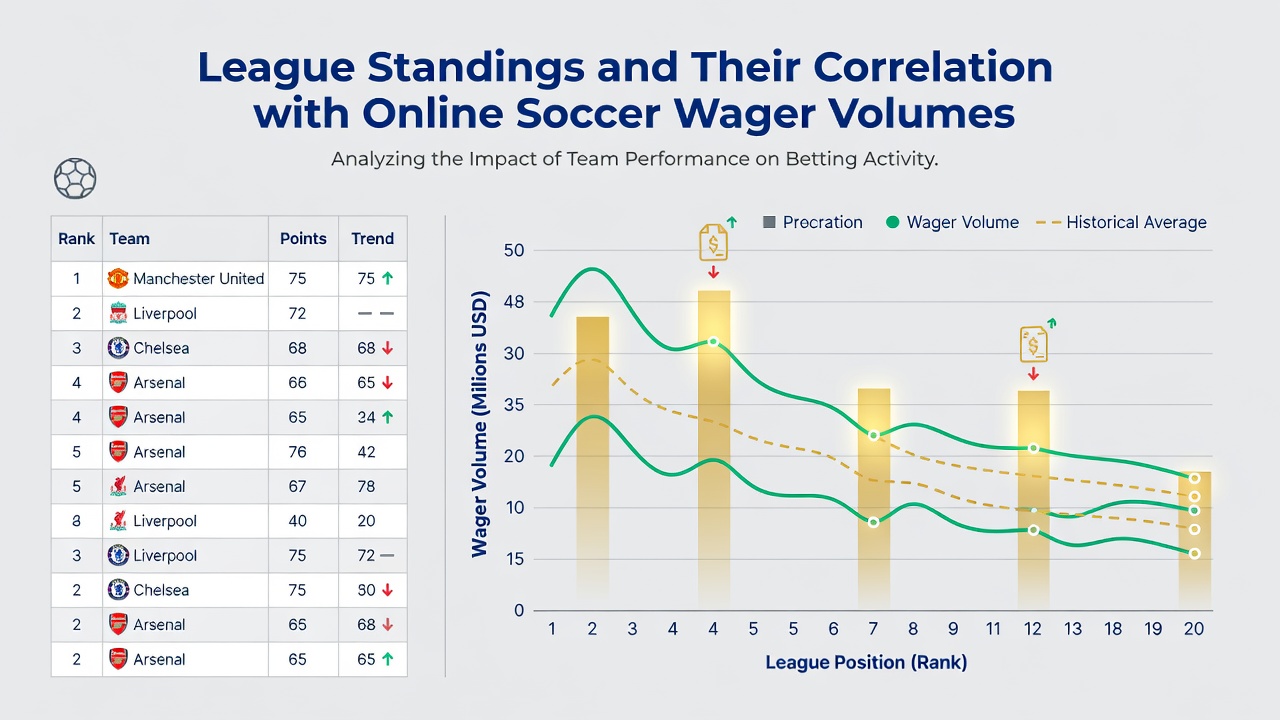
Additional evidence comes from platform-level disclosures required under Canadian provincial gaming regulations, where operators submit quarterly summaries that include category breakdowns by sport and market type. Cross-referencing these filings with publicly available league tables demonstrates that volume increases concentrate around fixtures with direct implications for final table placement, such as six-pointers between teams separated by three points or fewer. Analysts at the European Gaming and Betting Association have highlighted that these patterns hold across both pre-match and in-play segments, although in-play volumes react more rapidly to live score updates that further modify perceived standing consequences.
Factors That Moderate the Relationship
While the overall correlation appears consistent, certain conditions alter its strength. Matches scheduled during international breaks, for example, show smaller volume responses to domestic league-table movements because participant attention disperses across multiple competitions. Likewise, when multiple teams remain mathematically involved in title or relegation races simultaneously, the volume increase spreads across a wider set of fixtures rather than concentrating on one or two standout games. Data from October 2026 rounds illustrated this dispersion effect, with total wager counts rising but individual match peaks remaining moderate compared with earlier seasons that featured clearer binary outcomes at the table extremes.
Weather disruptions and postponed fixtures also interrupt the typical pattern, as delayed matches remove immediate opportunities for participants to act on newly updated standings. Operators report that volumes return to expected levels once the postponed game is rescheduled, suggesting the relationship depends on timely alignment between table updates and available betting markets.
Conclusion
League standings function as a dynamic input that influences online soccer wager volumes in measurable ways across multiple competitions and seasons. Quantitative examinations of transaction data, regulatory filings, and academic datasets confirm that positional changes near critical thresholds correspond with sustained shifts in betting activity, particularly for matches carrying direct implications for final placement. These patterns persist after controlling for confounding variables, and they appear in records maintained under different regulatory frameworks. Continued monitoring of these relationships will remain relevant as league schedules progress through the remainder of the 2026 calendar year and beyond.