Stadium Weather Dynamics and Their Effect on Live Soccer Odds Movements
Wendy Hayes · Oct 22, 2026
Stadium Weather Dynamics and Their Effect on Live Soccer Odds Movements
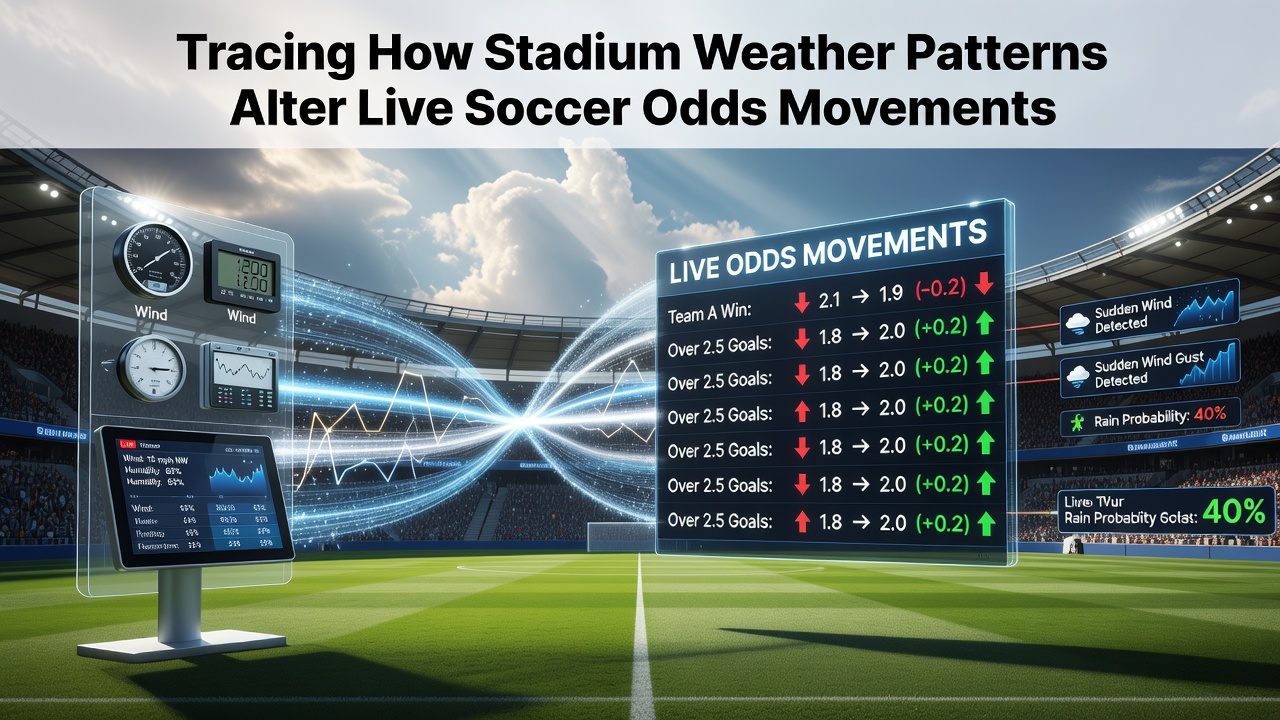
Stadium weather patterns create measurable shifts in live soccer odds because precipitation, wind speed, temperature fluctuations, and humidity alter player movement, ball trajectory, and overall match tempo in real time. Bookmakers adjust lines continuously as these environmental factors unfold, and bettors who track the data see odds move within minutes of weather changes reported by on-site sensors. Research from meteorological agencies and sports performance labs shows that even moderate rain reduces passing accuracy by up to 15 percent while strong crosswinds push long balls off target more frequently.
Key Weather Variables That Drive Odds Adjustments
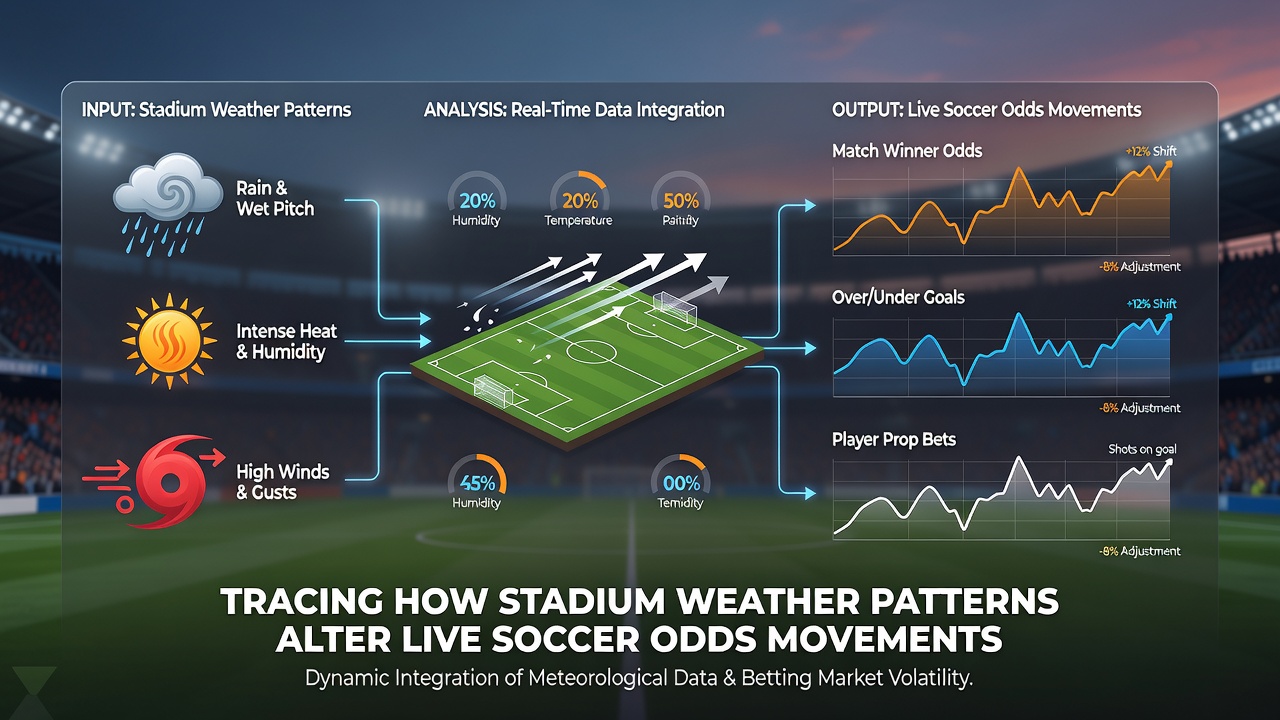
Rainfall intensity ranks among the most immediate triggers for odds recalibration because it changes pitch friction and ball grip within the first minutes of precipitation. Data collected across European leagues indicates that matches played in steady drizzle produce fewer through balls and more long-range attempts, prompting live odds on total goals to drift toward the under. Wind patterns exert similar pressure yet operate through different mechanics, since gusts above 25 kilometers per hour increase the variance in set-piece delivery and reduce the success rate of driven crosses. Observers note that temperature spikes above 28 degrees Celsius during afternoon kickoffs accelerate fatigue in midfielders, which often leads to a measurable drop in high-intensity runs after the 60-minute mark.
How Live Betting Markets Respond to On-Field Conditions
Live odds engines incorporate weather feeds from stadium weather stations alongside statistical models that quantify expected changes in expected goals. When heavy rain begins in the 25th minute, algorithms widen the spread on both teams' goal totals and shorten prices on defensive fouls because sliding challenges increase. One documented case from the 2025 Bundesliga season showed a sudden wind shift during a Leipzig home match that moved the draw price from 3.40 to 3.10 within eight minutes as crossing accuracy fell. These rapid recalibrations occur because operators receive automated alerts from pitch-side anemometers and rain gauges that feed directly into pricing teams.
Regional Patterns and Seasonal Influences in October 2026
October 2026 brings transitional weather across major European and South American leagues, with Atlantic storms increasing the frequency of windy evenings in northern venues while southern stadiums still experience warm, humid afternoons. Figures from the Australian Bureau of Meteorology reveal that similar spring shoulder seasons in the A-League produce higher rates of match postponements and in-game weather stoppages, which in turn compress live odds windows for total corners and cards. In North America, early October matches in MLS often coincide with sudden temperature drops after sunset that correlate with increased stoppage time and a rise in late-game draws according to league injury and performance reports.
Data Sources and Measurement Techniques
Operators rely on a combination of public weather APIs and proprietary stadium sensors to update models every 30 seconds during active play. A joint study released by Environment and Climate Change Canada and university researchers demonstrated that humidity levels above 80 percent extend recovery intervals between sprints by an average of 12 seconds, a factor that directly feeds into expected-goals calculations used for live pricing. These inputs allow markets to price substitutions and tactical shifts more accurately than pre-match lines alone.
Conclusion
Stadium weather remains a persistent variable that forces continuous recalibration of live soccer odds because it modifies physical conditions on the pitch faster than most other in-game events. Tracking sensor data alongside league-specific performance baselines gives observers a clearer view of why certain markets move when rain or wind arrives and why those movements persist across different competitions and seasons.